Why Leadership Trust Erodes
Most executives don't lose trust through scandal. They lose it through small gaps: a reorganization announced without context, incentives that contradict stated values, or a promise quietly dropped. Each gap is minor; together they teach people to discount what leaders say.
Reorg without context
Trust left: 82%
Values vs. incentives
Trust left: 64%
Dropped promise
Trust left: 46%
Surprise decision
Trust left: 28%
Five Pillars of Trust in Leadership
Pillar 1 of 5
Integrity
Decisions match stated values, especially when it costs something. Teams watch the hard calls, not the speeches.
Warning signs
- Values posters that contradict bonus criteria
- Exceptions made quietly for senior people
- Hard trade-offs explained only after the fact
Try this week: Name one recent hard call and explain the value behind it to your team.
Quick Self-Check: Your Leadership Trust Score
Rate yourself honestly on each pillar. Nothing is saved or sent.
Solid, with gaps
Focus first on Integrity: Name one recent hard call and explain the value behind it to your team.
Five Steps to Build Trust in the Workplace
Diagnose before you prescribe
Ask where trust is breaking: between you and your team, across functions, or with customers. Different gaps need different fixes.
- Run short, anonymous pulse questions on fairness and candour
- Map trust gaps by audience: team, peers, board, customers
- Separate symptoms (slow decisions) from causes (unclear authority)
Close the intention–impact gap
Leaders judge themselves by intent; teams judge them by impact. Ask a few trusted people how your decisions actually land.
- Ask three people: "What did my last big decision signal to you?"
- Compare what you intended with what people heard
- Adjust how you announce, not only what you decide
Make small, visible promises — and keep them
In a new role, early follow-through on modest commitments does more than any grand vision statement.
- Commit to two or three modest, specific promises in public
- Report back on each one when it is done
- Say no clearly rather than yes vaguely
Design trust into the system
Clear decision rights, transparent criteria, and honest governance make trust repeatable instead of personality-dependent.
- Write down who decides what, and on which criteria
- Make escalation paths and timelines visible
- Review incentives for conflicts with stated values
Repair quickly and in public
When trust breaks, name it, own your part, and show what changes. Delay compounds the damage.
- Acknowledge the breach quickly and specifically
- Own your part without defending intent
- Show the concrete change, then follow up later
Tap a number to mark a step as something you already practice.
Designing an Organizational Trust System
Organizational trust lasts when it doesn't depend on one charismatic leader. Executives can design it in, the same way they design financial controls. Explore the five layers:
Layer 1
Governance
Publish who decides what, and on which criteria, so outcomes feel fair even when people disagree.
Building Trust in Your First 90 Days as a New Executive
A new leader starts with borrowed trust: people extend some goodwill because of the title, then watch to see if it is deserved. The first three months decide whether that goodwill becomes real belief.
- Meet people across levels, not only your direct reports
- Ask what previous leaders got right and wrong
- Make no big changes you can't explain
How to Measure Organizational Trust
Trust feels intangible, but its effects show up in numbers you already track. Watch these indicators together over time rather than treating any one as a verdict.
| Indicator | What to measure | What good looks like |
|---|---|---|
| Candour | How early bad news reaches leaders | Problems surface in weeks, not quarters |
| Fairness | Pulse score on whether decisions are fair | People disagree with outcomes but accept the process |
| Follow-through | Share of leadership commitments closed on time | Promises are tracked and reported openly |
| Retention | Voluntary exits among high performers | Talent stays through change |
| Speed | Time from proposal to decision | Fewer escalations and re-litigated decisions |
The Business Case for Trust in Leadership
Faster decisions
Less time spent checking, escalating, and re-arguing settled questions.
Earlier warnings
Teams raise risks while they are still cheap to fix.
Change that sticks
People commit to new direction instead of waiting it out.
Frequently Asked Questions
Go Deeper With the Book
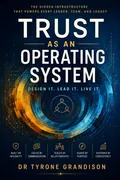
Trust as an Operating System by Dr Tyrone Grandison gives executives the full framework, publishing December 25, 2026.