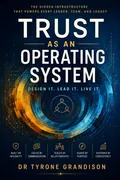
Original perspectives inspired by the ideas in Trust as an Operating System. Every Saturday · 9 AM Eastern Time
Latest Briefing / Governance
Your Savings May Be Someone Else’s Work
Organizational trust weakens when one division’s savings become another division’s unpaid workload. Executives need a cost-transfer discipline that distinguishes genuine efficiency from displaced effort before approving budgets, automation programs, or changes to shared enterprise services.
Organizational trust weakens when one division’s savings become another division’s unpaid workload. Executives need a cost-transfer discipline that distinguishes genuine efficiency from displaced effort before approving budgets, automation programs, or changes to shared enterprise services.
Organizational trust is tested when a relationship ends. Executives who make departure fair, intelligible, and workable demonstrate that their enterprise earns continued participation rather than depending on obstacles to keep customers, suppliers, or partners attached.
Organizational trust weakens when temporary authority becomes permanent by default. This issue examines how executives can put expiration dates on emergency powers, require fresh justification, and restore normal governance without surrendering necessary speed or control.
Organizational trust depends on what happens after information is collected. Executives must govern secondary data use with explicit boundaries, renewed authorization, and credible refusal rights before operational convenience quietly becomes an entitlement to unrestricted access.
How to build trust in a team: the strongest executive signal is not the absence of bad news, but how quickly uncomfortable information reaches the people who can act.
Organizational trust is infrastructure: a leadership team can promise trust, but only its decisions, incentives, and follow-through make that promise dependable.
Building trust in the workplace is tested most when news is bad. Executives who share difficult information early, honestly and with clear next steps strengthen trust in leadership instead of spending it.
As AI shapes more business decisions, trust in leadership depends on transparency and accountability. Executives must explain where AI is used, who remains responsible, and how people can question the outcomes it influences.
Organizational trust grows when purpose shapes real decisions. Executives earn credibility not by publishing mission statements but by showing, especially in hard trade-offs, that stated purpose actually changes what the company chooses to do.
How to build trust in a team spread across countries and cultures? Executives must replace hallway familiarity with deliberate relationship design, shared norms, and fairness that every location can see and feel.
Trust in leadership is rarely lost in a crisis. It erodes in the small promises executives forget. Building trust in the workplace starts with treating every commitment, however minor, as a public test of integrity.
A practical approach to rebuilding trust in leadership after a broken commitment, a failed change, or a public mistake, without relying on a single apology.