The Executive Trust Briefing / Governance
Trust Is Infrastructure, Not a Slogan
Organizational trust is infrastructure: a leadership team can promise trust, but only its decisions, incentives, and follow-through make that promise dependable.

“Trust is the infrastructure nobody sees until it fails. Build it the way you would build a bridge: for the storm, not the sunny day.”
The Invisible System Behind Execution
When an executive team approves a strategy, it assumes people will share accurate information, raise risks early, and deliver on commitments. Those assumptions are the practical foundations of trust. If they fail, even a sound strategy becomes expensive to execute.
Treating trust as reputation alone misses this operating reality. Reputation is what stakeholders believe about you; trust infrastructure is what allows them to rely on you when the outcome is uncertain. The distinction changes the leadership question from whether people like the organization to whether its systems deserve their confidence.
Look for Friction, Not Just Sentiment
A useful first diagnostic is to find where people add protective work. Extra approvals, duplicated reporting, informal workarounds, and reluctant escalation may signal that formal commitments are not dependable. These behaviors are clues, not proof: some controls are necessary, and a leader must distinguish healthy assurance from compensating for a credibility gap.
Choose one important cross-functional decision and trace its path. Can each person explain who owns it, what evidence matters, and how disagreement is resolved? Ambiguity often leaves people relying on personal relationships rather than a repeatable system. That may work temporarily, but it does not scale.
Make Accountability Usable
Start with a clear decision owner, a visible escalation route, and a record of the reasoning. Tell stakeholders what the decision means for them and when it will be revisited. These are modest practices, but together they reduce the need to guess.
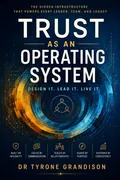
The concepts behind Trust as an Operating System invite executives to connect governance, ethics, transparency, and culture. Rather than launch another trust campaign, improve one piece of the system people use every day. Confidence grows when the organization becomes easier to understand and more reliable to work with.
From Insight to Action
Your Leadership Practice
Trace one cross-functional decision from request to outcome.
Name a decision owner and an escalation route that everyone involved can describe.
Ask where extra approvals compensate for unreliable commitments, then repair the underlying gap.
0 of 3 Practices Completed
Original editorial commentary inspired by the book’s concepts; not an excerpt from the book. Weekly editions are AI-assisted; the opening quote is drafted with AI for Dr Tyrone Grandison.